
Official website of the Camino da Geira e dos Arrieiros® (CGA)
The CGA is a 239 km pilgrimage route between Braga and Santiago de Compostela, following Roman roads and medieval muleteer routes.
- It has been recovered, promoted and publicised by pilgrims and cultural groups, without the participation of municipal associations, intermunicipal bodies, consortia, GDRs or similar entities.
- It does not have good waymarking on the ground and, in the central section (the municipalities of Padrenda, Cortegada and Ribadavia), the arrows are repeatedly vandalised. Using a GPS track is essential.
- It is one of the five Caminos that enter Santiago de Compostela directly.
- It was certified by the Church and the Pilgrim’s Office in March 2019.
- More than 8,500 pilgrims have walked it since 2017.
Are you looking for a different Camino?
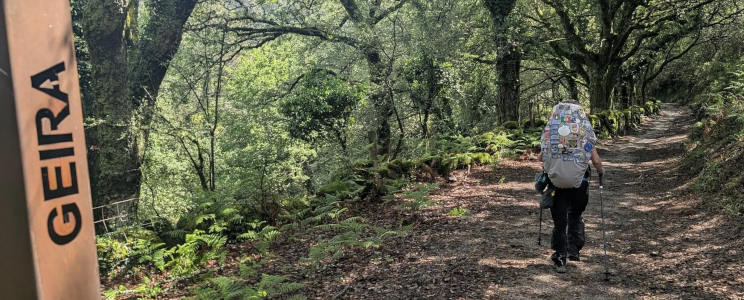
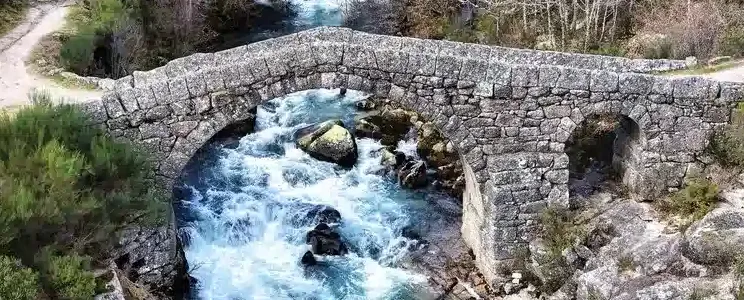
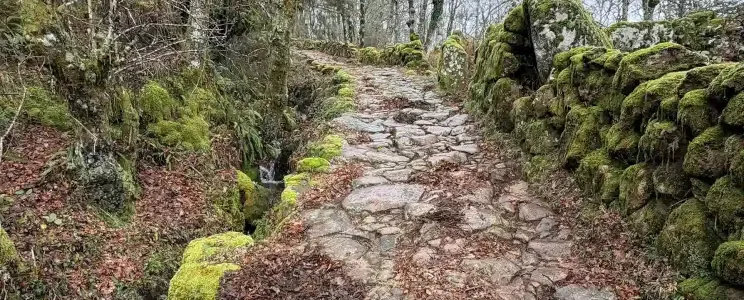
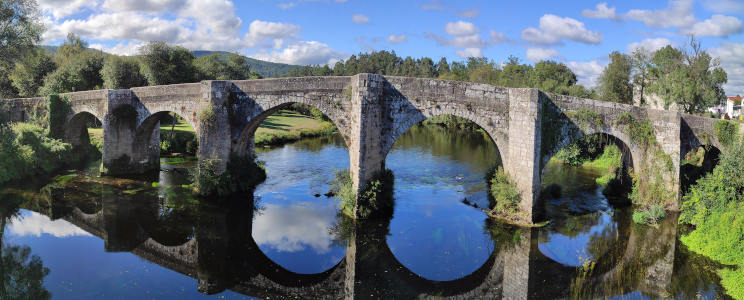
239 km of history and nature await you: more than 40 km along the section of Roman road with the greatest number of original milestones in Europe; crossing Portugal’s only national park; crossing the international border four times; discovering the paths around Castro Laboreiro, silent witnesses to the smuggling era; walking through the region that produced the most highly valued wine in Compostela between the 12th and 15th centuries; following its main transport route towards the city of the Apostle; and crossing bridges as simple as Gomaíl or as impressive as Pontevea.
Dare to discover it
Pilgrim passage statistics
| Year | Estimated | Photos | Compostela |
|---|---|---|---|
| 2017 | 114 | 114 | — |
| 2018 | 247 | 221 | — |
| 2019 | 1.033 | 862 | 367 |
| 2020 | 190 | 143 | 99 |
| 2021 | 1.059 | 904 | 298* |
| 2022 | 1.211 | 1.032 | 418 |
| 2023 | 1.320 | 851 | 547 |
| 2024 | 1.247 | 839 | 690 |
| 2025 | 1.364 | 782 | 757 |
| 2026* | 1.351 | 965 | 873 |
| TOTAL | 9,136 | 6,713 | 4,049 |
* 2021: Compostelas not published (calculated by adding some of the recorded starting points). Not all pilgrims are photographed because we do not meet everyone or because many do not authorise photographs and publication. * 2026: Data up to 13 October.
| Year | New nationalities |
|---|---|
| 2017 | Portugal Spain |
| 2018 | Brazil France Poland Ukraine |
| 2019 | Netherlands Italy United Kingdom Switzerland |
| 2020 | Germany Australia Japan |
| 2021 | Denmark United States Russia Slovenia Czech Republic Argentina |
| 2022 | Belgium Belize Lithuania Hungary Mexico |
| 2023 | China Aruba Austria Azerbaijan Luxembourg Norway Puerto Rico Taiwan Afghanistan Andorra Bahamas Colombia Palestine Romania Uruguay |
| 2024 | Canada Slovakia South Korea Ireland New Zealand |
| 2025 | Malta South Africa Algeria Costa Rica Sri Lanka |
| 2026* | Israel Iran Nigeria |
 Portugal
 Spain
 Brazil
 France
 Poland
 Ukraine
 Netherlands
 Italy
 United Kingdom
 Switzerland
 Germany
 Australia
 Japan
 Denmark
 United States
 Russia
 Slovenia
 Czech Republic
 Argentina
 Belgium
 Belize
 Lithuania
 Hungary
 Mexico
 China
 Aruba
 Austria
 Azerbaijan
 Luxembourg
 Norway
 Puerto Rico
 Taiwan
 Afghanistan
 Andorra
 Bahamas
 Colombia
 Palestine
 Romania
 Uruguay
 Canada
 Slovakia
 South Korea
 Ireland
 New Zealand
 Malta
 South Africa
 Algeria
 Costa Rica
 Sri Lanka
 Israel
 Iran
 Nigeria
* 2026: 52 nationalities recorded up to 9 October 2026.
Is the CGA right for you?
It may not be the best choice if:
- This is your first Camino de Santiago.
- You prefer walking through urban areas or on easy paths.
- You do not want to use a GPS device during the route.
- You prefer short stages or frequent accommodation and services.
- You are looking for a well-waymarked route with large numbers of pilgrims.
- Your budget is very limited.
It may be a good choice for you if:
- You enjoy nature and history.
- You want to walk through rural areas, mountain paths and old stone roads.
- You know how to navigate using GPS.
- You can walk 30 km in a day.
- You want the sound of your own footsteps to be your travelling companion.
- Your aim is to walk in peace and quiet.
Recovery timeline
The CGA is the result of a long process of research that began to take shape at the end of the 20th century. At a conference held in 1995 in Valença do Minho, from 21 to 23 April, the route from Braga to Portela do Homem was already presented. By 2004, the route through the province of Pontevedra had already been walked by pilgrims and, in 2008, the Deputación da Coruña published the route through its province in its official cartography.
During the first decade of the 21st century, work intensified to connect the different sections. In 2011, the Codeseda.com group, active since 1999, created the Codeseda Viva association and, in 2015, together with members of the Berán no Camiño platform, defined the complete route: 239 km between Braga and Santiago, without variants.
In May 2017, following the presentation in Braga, María, Luis and João arrived in Santiago de Compostela as the first pilgrims. From that moment onwards, a steady flow of pilgrims was maintained.
On 28 March 2019, after reviewing the historical documentation submitted by Codeseda Viva, the Chapter of Santiago Cathedral certified the Camiño Xacobeo da Geira e dos Arrieiros, granting the Compostela under the same conditions as the other already recognised Caminos.
The CGA is a Camino recovered by pilgrims for pilgrims, whose main objective is to maintain a balance between local residents and visitors, avoiding overcrowding and encouraging coexistence and introspection.
Printed guide
Description of the route and its cultural, historical and natural heritage.
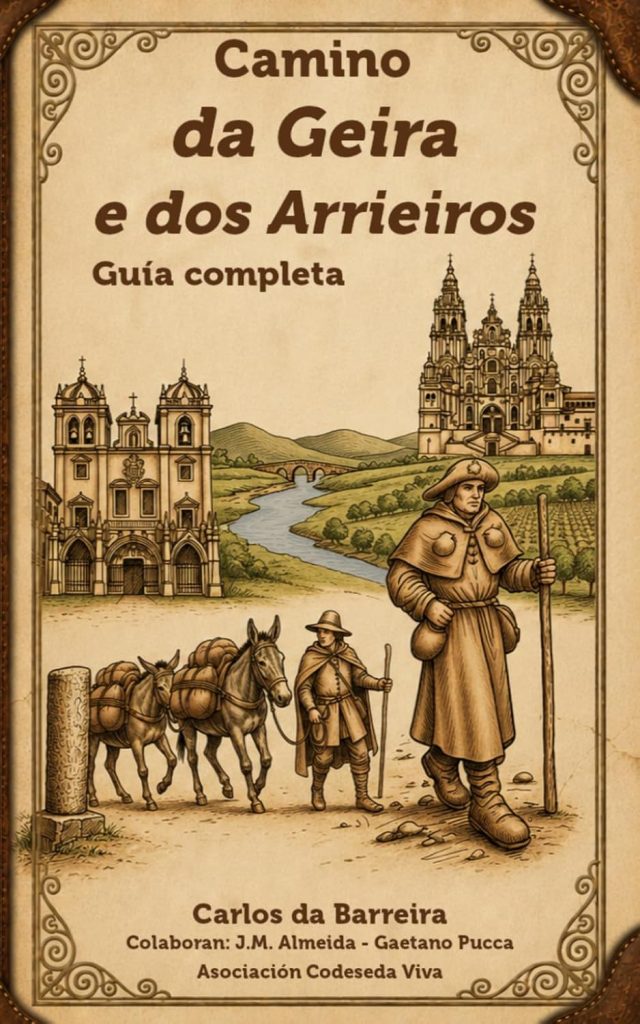
It was written by Carlos da Barreira, José Manuel Almeida and Gaetano Puca. The proceeds are used to cover the costs of this website, so purchasing the guide is essential to its continued operation. These are the Amazon purchase links: